Tuesday, 8. Jun 2010. - Hotel Hyatt Regency

Information technologies and Future of Media in Serbia

Will in the near future the Internet become the main source of obtaining information, and what does it mean for the printed and electronic media? In which way does the Internet influence the income of the printed media, and can the serious profit be made by advertisement on the Internet? Does the so-called "Internet journalism" reduce the quality of the report or it enables the printed media to be fast and efficient? Is the IT industry an enemy or the natural partner of the printed media? What does the occurrence of the advanced information technologies mean for the electronic media, and can the sophisticated IPTV services in the foreseeable future drastically reduce the profit made by the TV advertisement? Will the use of the advanced information technologies on the channels of the cable television enhance the competitiveness on the market of the TV programs? Will the advanced IP TV services and cable channels soon make the purchase of the foreign fun-sports contents redundant, and do the domestic media have the program resources to remain competitive on the market with their own production?

Wednesday, 8. Sep 2010. - Hotel Hyatt Regency-Focaccia Private Room & Lounge

The energy potential of forests in Serbia - New "green" technologies

Registration:  Registrations are available on the day of the conference, in the Hyatt Reegency Hotel, in front of Focaccia Private Room&Lounge, staarting from 08.30 am.

Media Registration: Redaction of electronic and printed media can register their reporters by sending mail to conference@danas.rs no later then Tuesday September 7th at 4.30pm.

9.00 to 9.05 Opening: Željko Pantić, director of Danas Conference center;

9.05 to 9.10 Video Announcement;

9.10 to 9.25 Key note speech:  Petar Škundrić, Minister of Mining and Energy of Republic of Serbia.

9.25 to 11.20 Pannel fidscussion: Energy potential of forests in Serbia - New "green" technology;

Confirmed panelists: Bojan Kovačić, Manager of the Agency for Energy Efficiency; Gregory Krupnikovs, International expert on renewable energy UNDP; Aleksandar Vasiljević, Executive of the Public Company "Srbija Šume"; Nenad Đakovac, General Manager of Public Utility Company "Belgrade Power Plants"; Slađan Stojanović, General Manager of Lagado Serbia, ...

Can woods in Serbia provide firewood and raw material base of biomass needed to produce cellulosic bio fuels? What models of using wood waste for energy purposes, is used in developed European countries? What is the potential of energy producton of pellets from wood waste in terms of use for central heating systems by heating over Serbia? Is there any standardization of the quality of pellets from wood waste and how to prevent abuses in this area? What is the role of the Serbian Furniture Industry in the greater utilization of wood waste? What are the infrastructure and logistical obstacles to greater utilization of forest biomass energy potential in Serbia? How to ensure responsible management of forest resources in Serbia, so that the whole system was a long-term sustainable? What does the new legislation, which regulates the management of forest resources in Serbia?

Wednesday, 22. Sep 2010. - Danas Conference Center, GTC Avenija 19, Vladimira Popovića 38-40

Strategic Drinking Water resources of Serbia

Key note panelist: Oliver Dulić, Minister of Environment and Spatial Planning of the Republic of Serbia

Confirmed panelists: Tanja Knežević, Prim.Dr.Sci.Med., Director of the Insitute of Public Health; Željko Ožegović, Member of the City Council of Belgrade; Cijo Babić, General Manager of Public Utility Company "Belgrade Water Supply and Sewerage"; Dr Ivan Stanković, Deputy General Manager Tahal-Fideco Serbia; Juerg Staudeman, UNDP Deputy Chief of Mission in Serbia; Aleksandra Rauški,  Quality Assurance Manager Coca Cola Serbia;  Predrag Stojković, Department of Water Technology, Siemens Serbia.

Are the sources of drinking water in Serbia in danger because of the uncontrolled process of leaving the waste in landfills all over Serbia? Does drinking water affect 95 percent of unrefined spills of waste water from sewage systems throughout Serbia directly into the river flows? Is drinking water a strategic resource that must be available to all citizens and will become the economic product is available only to those who can pay? Is the existing water supply system in cities throughout Serbia in such condition that in the long term it can not guarantee the accuracy of drinking water? Is the existing system of collective charge of drinking water in large apartment buildings in major cities in accordance with the Serbian Constitution and the right of citizens to pay only what you actually spend? How to ensure use of technical water system to prevent the waste of potable water used by cities in Serbia used for street cleaning? How big producers of beer, soft drinks, mineral water and fruit juices are controlling the water they use, and that measures taken to ensure clean water resources for future production?

Wednesday, 6. Oct 2010. - Danas Conference Center, GTC Avenija 19, Vladimira Popovića 38-40

The competitiveness of the automotive market in Serbia

Does the state subsidize the price of cars in accordance with the principles of open markets that applies in the countries of the EU? Which mechanisms that ensure competitiveness in the market, are using EU states that have domestic production of cars? Does the model of state subsidies to create thousands of jobs in one city, while the other leads to the extinction of thousands of jobs in towns across Serbia related to the manufacturers whose cars do not have government subsidies? Whether state subsidies need to be bound to attract green field investments related to the production of the latest generation of cars with zero emission of CO2? Whether the state should subsidize the tax and customs import electric cars, which move in the global commercial sale late 2010? Whether state subsidies should promote technologies that reduce energy import dependence of Serbia or technologies that leaves the global auto industry?

Wednesday, 20. Oct 2010. - Danas Conference Center, GTC Avenija 19, Vladimira Popovića 38-40

The private education system in Serbia

Has the private education system in Serbia, from primary and secondary schools to universities, the level of acquired knowledge and the quality of teaching at the state education system? How private education systems in Serbia, provided the integrity of teaching and assessment, regardless of social or economic status of students? Does private education system provide an additional quality of teaching and knowledge and how these facilities in line with similar services of private universities in Europe? Are private universities in Serbia producing personnel who need the labor market and that the private university degrees recognized outside of Serbia? What state can do to improve the standardization of the quality of teaching and control the validity of diplomas obtained in the private education system?

Wednesday, 3. Nov 2010. - Danas Conference Center, GTC Avenija 19, Vladimira Popovića 38-40

Reform of the pension system of Serbia

Is there any long-term sustainable reform of the pension system without changing the attitude towards work in Serbia? Whether the existing state pension system in Serbia in general can be effectively reformed? Is the arrangement with the International Monetary Fund set a temporary measure or essential change of the whole system of pensions in Serbia? Whether private pension funds need to be integrated into the pension system as a mandatory or voluntary? What is the role in reforming the pension system has a private insurance sector in Serbia? Is there any reform of the pension system, if alarming demographic trends in Serbia continue, and should the state as part of pension reform, invest more money in support of the higher birth rate? How long it is possible to maintain economically unjustified levels of state pensions, and what about Greece says the example?

Wednesday, 17. Nov 2010. - Hotel Hyatt Regency

Copyright and Intellectual Property in Serbia

The Microsoft Synergy 10 - Legal Framework Day
What is the existing practice of applicable regulations regarding the protection of intellectual property rights and copyrights? What are the experiences from developed countries and economies, applicable in Serbia, in terms of copyright and intellectual property? Why is on the streets of cities in Serbia, tolerated large-scale illegal sales of pirated music, movies, video games or software? How large are the state annual losses due to piracy in the music, film or software, and how much does the organized crime is earning on that basis? How much is global concept of copyright and intellectual property protection, generally applicable to the Internet as a medium that transcends national borders and laws?

Wednesday, 17. Nov 2010. - Hotel Hyatt Regency

E Government and costs reduction of public sector in Serbia

The Microsoft Synergy 10 - Legal Framework Day
Is it possible to reduce the substantial costs of the various segments of the public sector in Serbia without technological modernization? How does use of E Government decision today, reduces costs and saves time in different segments of the State Administration and Local Self-Government? Is there a sustainable economic development without reducing the cost of public sector and what are the consequences of failure in this area for many members of the EU? Can application of different technological solutions, reduce the costs of the health system of Serbia? What state educational system can learn about the value of applying information technology in the teaching process, from the positive examples of private Universities in Serbia? Will the arrangement of Serbia with the International Monetary Fund, especially when it comes to the segment to reduce public expenditure, would be applicable without substantial application of E Government solutions in the public sector in Serbia?

Wednesday, 17. Nov 2010. - Hotel Hyatt Regency

Integration of Serbia into the global economic trends

The Microsoft Synergy 10 - Legal Framework Day
How much is Serbia technologically behind the global economic trends and how this affects the competitiveness of the backwardness of the whole economy in the world market? What is the role in the integration of Serbia into global economic flows has the EU accession process, the process of joining the WTO and what these processes mean for different business entities? What is the role of technological modernization of more efficient business operations of companies in Serbia, to the world's most developed markets? Can Serbia's economy rather than exporting raw materials to become exporter of finished products and services, and whether the process without the technological modernization of operations at all possible? Are Serbian companies able to sell its products and services in the most demanding international markets, and what is the secret of their success? How Serbia integrated into the global investment trends in the mass application of environmental technology and management of various types of waste relating to the IT industry?

Wednesday, 1. Dec 2010. - Danas Conference Center, GTC Avenija 19, Vladimira Popovića 38-40

Underground economy and tax system in Serbia

Should the state increase the taxes or improve the tax collection system! Is the overall tolerance of the informal economy purchasing of social peace or a factor of undermining the whole economy? How is the illegal payment of wages in Serbia, related to the unrealistically high tax and other burdens, and how the light of that fact, official statistics on the amount of salary in Serbia real? Are the unrealistically high trade margins in retail, one of the main generators of the grey economy in Serbia? Does gray economy provides jobs to the citizens of Serbia and generating employment through the destruction of enterprises according to law? Is mass tolerance of the grey economy possible in Serbia without Political Protection? What is the role of organized crime in the development of the underground economy in Serbia?

Wednesday, 15. Dec 2010. - Hotel Hyatt Regency

Modernization of sports infrastructure-social and security aspects

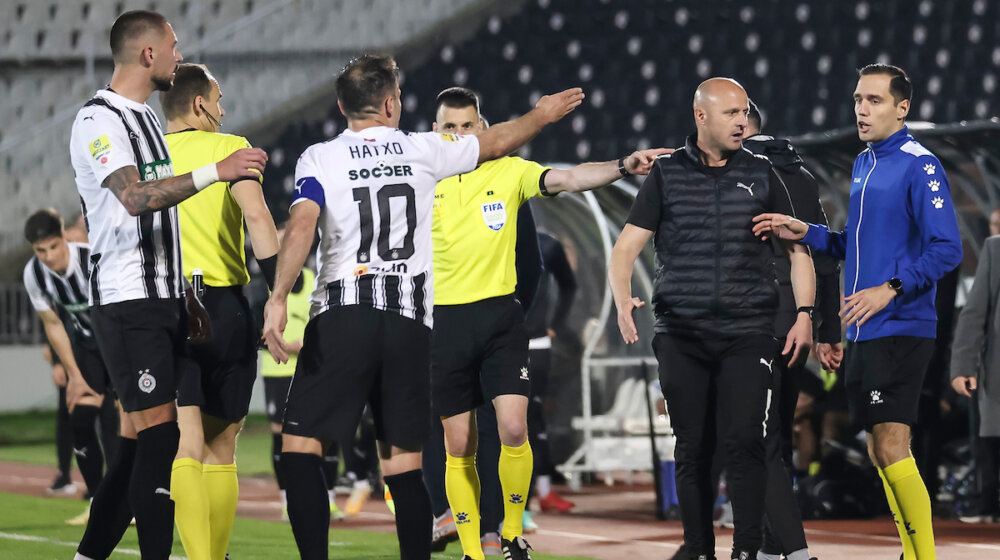
Is there security at stadiums in Serbia, without building completely new facilities with adequate infrastructural conditions that guarantee the safety of all spectators? What technologies are applied to modern stadiums in Europe and the world, effectively preventing violence and vandalism? Are the existing sports facilities in Serbia safe in case of emergencies, and how much of the existing football stadium has a use permit at all? Why the same fans who demolish the existing football stadiums, it's never been done at the Belgrade Arena, and the psychological impact of new sports facilities on the behavior of the fans? Is football in Serbia a family fun or a ground for extremism of all kinds, and what kind of role they are playing in the process of investment in new stadiums? What is the social role of sport in rural areas, and why the construction of new stadiums in small places is important prerequisite to prevent the departure of the population in big cities? Why are the Europe's largest cities building multifunctional sports complex, not just sports facilities, and what is the social and economic impact of such investments? Is there a truly sustainable model of sport in Serbia, excluding the new stadiums that will be safe for families with young children?

Media partners

Blic Produkcijska Grupa Mreža ArenaSport Poslovi Infostud Live e-TV NIN FoNet Vreme InfoBiro FOX televizija Pink televizija B92 SOS kanal Studio B Status

Corporative partners

Coca-Cola Hellenic Microsoft Grawe Srbijašume Lagado McCann Erickson Clipping Beogradski Taxi